“A lot of investors have no clue what they are investing in,” Broadcom CEO Hock Tan said at an event in Singapore this week. He compared AI investors to gamblers in a casino.
Tan has a front-row seat to the AI infrastructure buildout. Broadcom is a global technology giant that designs and supplies semiconductors along with other AI infrastructure. The company’s market value stands at nearly $1.7 trillion.
AI leaders’ concerns aren’t limited to investor overenthusiasm either. There’s a big structural problem with the AI boom: The demand for capital is becoming too big to ignore.
So today, let’s look at why access to funding is a growing issue – and it could threaten the whole economy…

In December 2021, a series of $10,000 investments in Larry Benedict's winning trades could have made $118,812 in just 42 days.While he can’t promise extraordinary results like this... Now he believes another rapid “profit window” will open October 28. Get his first ticker free before it begins.
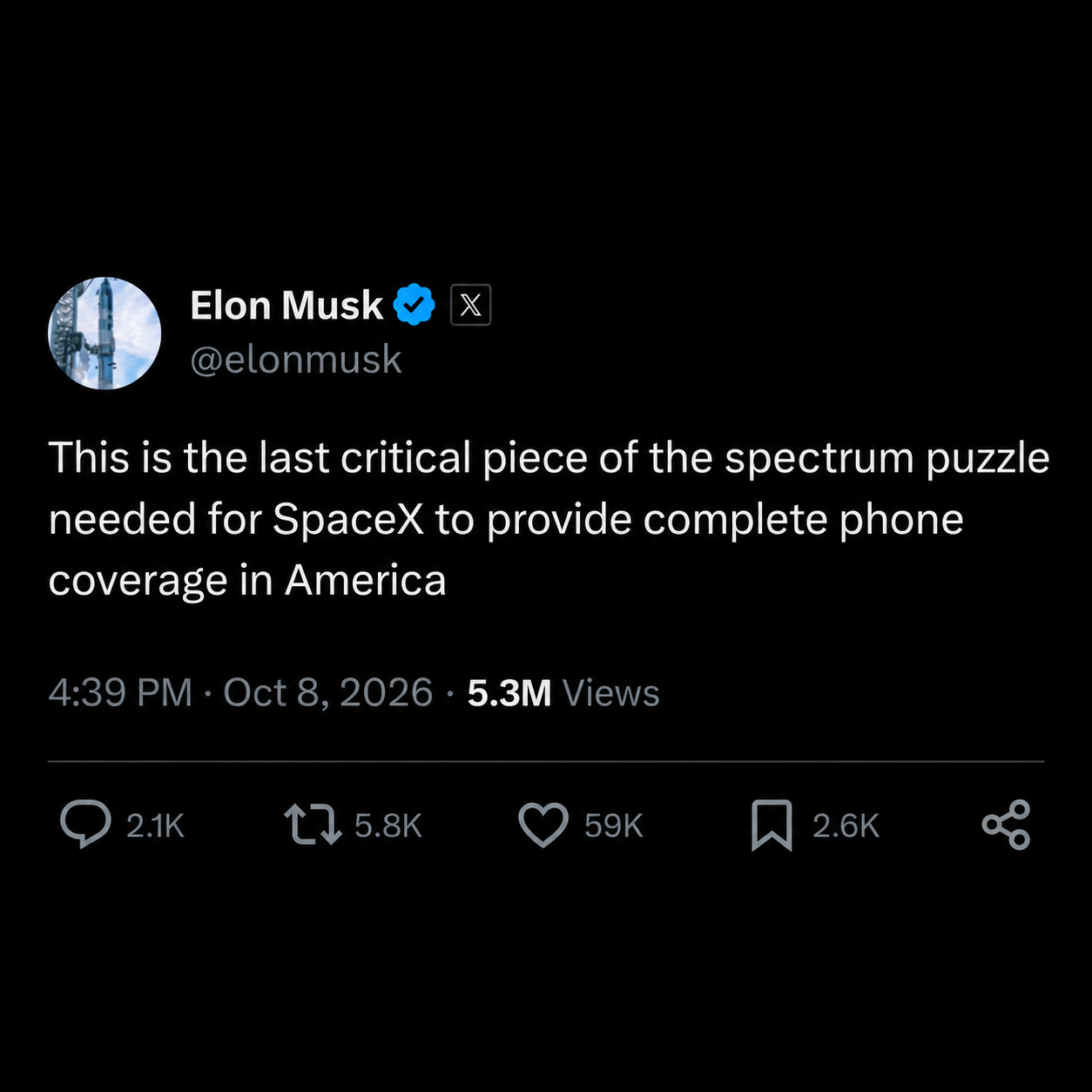
Elon Musk just dropped another bombshell... He's going after your cell phone provider. For months, Elon kept these plans under wraps. But late last week, Josh Baylin, Senior Tech Expert of Stansberry Research, finally showed his hand. Josh tracked this story for months, and it's playing out exactly as he predicted. Next, he believes Elon could launch a new device that kills the iPhone... and hands early investors his biggest payday yet. Potentially 50 times their money. Here's everything you need to do BEFORE he makes his move. Just act quickly because this story is moving fast.
Bottlenecks are nothing new to the AI buildout. The spotlight is constantly on the need for more semiconductors, especially Nvidia’s GPUs and Taiwan Semiconductor’s advanced manufacturing capabilities.
We’re also hearing more about surging demand for memory chips, which is boosting revenues for companies like Micron, Samsung, and SK Hynix.
Outside the semiconductor supply chain, energy is in the spotlight. Electricity demand from AI servers is projected to grow by 30% every year, with data center power consumption set to double by 2030.
But chips and energy are far from the only bottlenecks. Securing capital is quickly emerging as another sticking point for the AI buildout.
At the Singapore event mentioned above, Intel CEO Lip-Bu Tan said, “If there’s any challenge in the front, it’s capital and the cost of capital, and then the other part is in the longer run, people want to see the ROI.”
That’s a nod to the rapid increase in interest rates around the world. In the U.S. and other developed nations, bond yields are hitting their highest levels in decades. The 10-year Treasury hit 5.36% last week, the highest since the early 2000s.
Higher rates could threaten AI’s payoff. That could impact the attractiveness of future investments in AI, which could pose a threat to AI projects as funding gets more expensive.
And the capital constraint looks set to get worse.
Goldman Sachs projects that cumulative AI infrastructure spending will reach $7.6 trillion from 2026 through 2031.
Many AI hyperscalers are eating through their available cash flow and are turning to debt markets to fund new AI projects.
The five largest hyperscalers issued $500 billion in debt over the past year to fund the AI buildout. Estimates point to another trillion in debt issuance over the next three years.
But hyperscalers aren’t the only ones borrowing. Many governments are running big deficits and must borrow to cover the gap. Developed nations are projected to borrow a record $18 trillion just this year alone. That means AI has serious competition for available capital.
And high interest rates make funding projects more expensive and could cause hyperscalers to second-guess their spending plans.
That might not sound like a big deal, but AI spending has been a significant driver of the economy in recent years. By one estimate, spending on the AI buildout was responsible for 92% of U.S. economic growth during the first half of 2025.
That’s why this AI bottleneck should put investors on alert. It’s not just about AI’s success moving forward.
If the AI trend slows down, it could potentially jeopardize the very engine propping up the economy and stock market.
Regards,
Larry Benedict
Editor, Trading With Larry Benedict
P.S. An October 28 event could send up to $1 trillion rushing through the markets – creating a burst of trading opportunities in a market being transformed by AI. I’ve identified five tickers I’m watching, and I go into the details in a new free briefing. Watch here.
Reading Trading With Larry Benedict will allow you to take a look into the mind of one of the market’s greatest traders. You’ll be able to recognize and take advantage of trends in the market in no time.