Larry’s Note: Ask most Americans where their money is safe, and they’ll name the same four things. But all four assets could now be in danger. Not because of a stock market crash… but because of what will happen to the U.S. dollar on Wednesday, October 7 – a date set by the federal government.
That’s why I’d like to invite you to The Dollar Trap Summit – on Wednesday, September 30, at 8:00 p.m. ET.
There, Jeff Brown and I will explain what’s about to happen to the dollar… why it poses a threat to your money… and what you can do about it to turn the danger into a profit opportunity.
Save your seat with one click right here. I’ll see you on September 30 for the full story.
Most stock traders don’t spend a lot of time thinking about bonds. They’re far more interested in finding the next high-flying stock to trade.
But beneath the surface, the bond market has an enormous influence over almost every asset you trade. That was driven home this week with the release of the latest manufacturing Purchasing Managers’ Index (PMI)…
Manufacturing data showed a marked acceleration in factory activity. Private-sector businesses also showed stronger employment growth and rising prices. That raises the odds inflation stays high – and that the Fed hikes again.
That saw Treasury bonds sell off sharply. The benchmark 10-year yield surged from around 4.95% to over 5.1% – a dramatic move in the bond market. Back in March, the 10-year yield was as low as 3.93%.
That sharp move is a timely reminder of why bond prices matter – and why every stock trader should monitor them closely.

The U.S. dollar is approaching the biggest disaster in over 50 years… on a deadline set by the federal government. Jeff Brown and Larry Benedict say the dollar won’t weaken. It will break.
For the prepared, it could be the opportunity of a lifetime – in a market that’s delivered gains like $11,475 in 28 days. They explain everything in a free emergency broadcast on Wednesday, September 30, at 8:00 p.m. ET. Click here to reserve your seat.
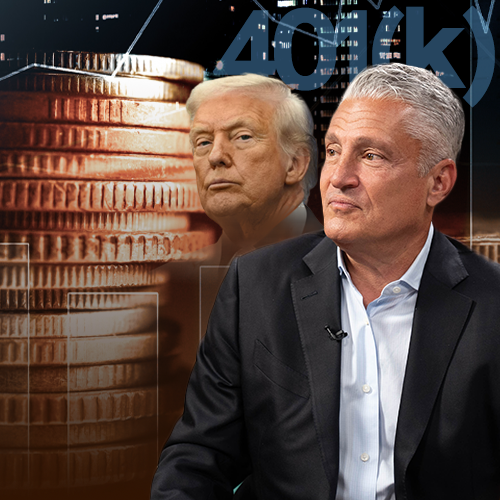
The rules of retirement are changing. President Trump is opening your 401(k) to a corner of the market where the wealthy have quietly earned 12% a year. Larry Benedict is naming the one ticker to play it – free. Click here to watch.
Treasury yields help establish the cost of money throughout the economy.
The 10-year yield acts as a benchmark for mortgage rates, business loans, and corporate bonds. So when it rises, borrowing generally becomes more expensive too.
That means folks might delay buying a new home, for example, or making large purchases. Businesses will face higher costs when refinancing debt or funding new projects – and companies may become more cautious about hiring and expansion.
In short, rising yields can act like a brake on economic activity.
That pressure wasn’t visible in Wednesday’s strong data yet. But it matters a lot more if the Fed’s latest hike is followed by another – and maybe a third.
At some point, higher borrowing costs cause consumers to delay purchases and businesses to scale back investment.
That’s why apparently good economic news can actually harm stocks. A stronger economy may support earnings, but it can also keep inflation elevated and increase the likelihood of future rate hikes.
The trick for the Fed is applying enough pressure to bring inflation under control without slowing demand so sharply that it causes serious damage to the economy.
When bond yields are low, investors see little return in safe-haven assets like government bonds. So they look to riskier assets like stocks to boost their returns.
But when 10-year Treasury yields push up above 5% – and the 30-year yield above 5.4% – that equation starts to change. Investors can earn an increasingly attractive return from relatively safer government bonds.
It comes back to risk versus return.
Large funds and institutions begin rethinking how much stock risk they’re willing to take on. Even a modest reallocation into government bonds can affect stock prices when enormous pools of capital are involved.
To be clear, it doesn’t mean that stocks must fall simply because yields reach a particular level. Markets don’t go in a straight line. The important thing is the direction and speed of the move – and whether that same message appears across other markets…
This week’s strong data was the main catalyst behind the surge in bond yields. But importantly, it landed in a market already worried about high oil prices, persistent inflation, Fed tightening, and the growing pile of government debt that needs buyers.
That’s why the reaction was so sharp.
From here, I’ll watch whether the 10-year yield can hold above the 5% level. If yields and the U.S. dollar continue rising while growth and tech stocks weaken, it could suggest that the market is pricing in more rate hikes ahead.
You don’t need to become a bond trader to benefit from watching bonds.
But if you ignore the bond market completely, you’re overlooking one of the most important factors affecting the stocks you trade.
Regards,
Larry Benedict
Editor, Trading With Larry Benedict
Reading Trading With Larry Benedict will allow you to take a look into the mind of one of the market’s greatest traders. You’ll be able to recognize and take advantage of trends in the market in no time.