One term you’ll often hear traders use is “high conviction.” They have a high degree of confidence in how they expect a trade to play out.
Maybe they’ve spent hours researching a company and the sector it operates in. They’re convinced that its earnings and profit growth look strong and that the broader economic backdrop supports their view.
The technical picture could be lining up too, with evidence that momentum is building. To some traders, it looks like a no-brainer – they simply have to get on board.
But if they’re not careful, they can run into trouble. While they might have strong conviction in the stock’s direction, the potential payoff might not justify the risk they’re taking on.
It’s a mistake that can cost a lot of money…
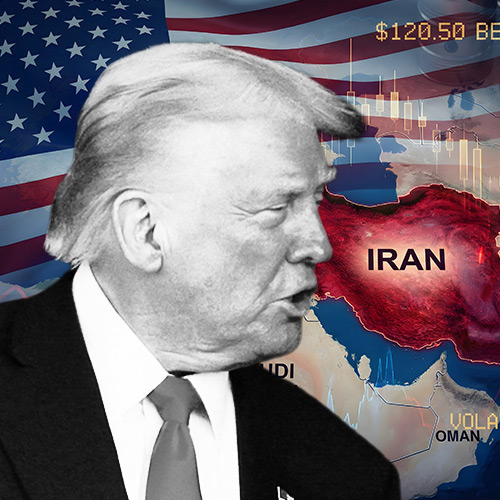
While Trump’s approval is plummeting over Iran… hedge fund legend Larry Benedict says it's a huge opportunity. One ticker has given folks a chance at payouts like $2,482, $7,623, and $8,704… All in under eight days. Click here to get the ticker for FREE.

Americans are discovering a rare "29% account" that pays 72x more than what your bank offers. It's NEVER been advertised to the general public… the big banks and financial giants have kept it to themselves for decades. Now it's available to everyday Americans - and banks are NOT happy about it. Discover the "29% account" here before they try to ban it.
You can have a high degree of confidence in a stock but still make a bad trade because your risk/reward profile is out of whack.
Consider a stock that jumps after releasing some bullish news. Perhaps it reported big revenue and earnings beats and management raised its guidance. Analysts increased their price targets, and suddenly the whole market wanted to own the stock.
You might think the stock has further to run. But that doesn’t automatically make buying it a good trade.
After the initial jump, much of the good news could already be reflected in the price. Momentum indicators could show that it’s overbought. And investors who owned the stock prior to earnings might want to lock in their profits.
So what happens if buyers’ enthusiasm quickly fades, leading to a sharp pullback? You could effectively be risking $2 for every $1 of potential profit.
That’s not the kind of trade I’m interested in, regardless of how confident I am about the company. Instead, I want the opposite. I want trades where the potential reward is significantly greater than the amount I’m prepared to lose. If I can risk $1 to potentially make $2 or $3, suddenly the math starts working much more in my favor.
It’s called an asymmetric payoff. And that’s where options fit into the picture.
One of the reasons I use options so extensively is that I know my maximum risk up front. If I buy an option, the most I can lose is the premium I paid.
I often look to buy options around the $3 level, which equates to $300 (an option contract is for 100 shares). If the trade doesn’t work, my loss is capped at $300. But if the move comes off, that same option could return double- or triple-digit gains.
So I’m risking a relatively small, fixed amount to chase a much larger payday. That’s the asymmetry I’m after.
Buying the stock outright doesn’t give me that. At $100 a share, 100 shares would tie up $10,000 – and my potential loss is far greater than a few hundred bucks.
If I can consistently structure trades where my potential gains outweigh my potential losses, every trade doesn’t need to be a winner. A small number of strong winners can compensate for a larger number of relatively smaller losses.
To be clear, this doesn’t mean that all option trades are good trades. You can still overpay for an option or pick the wrong strike price and expiration. Repeatedly buying call options in a strong downtrend is a surefire way to lose money. Time decay, implied volatility, and other factors all matter too.
But if you can combine high conviction in a stock’s direction with a strong risk/reward profile, you put the odds far more in your favor.
And in increasingly volatile markets, that could make the difference in finishing the year in the green.
Happy Trading,
Larry Benedict
Editor, Trading With Larry Benedict
Reading Trading With Larry Benedict will allow you to take a look into the mind of one of the market’s greatest traders. You’ll be able to recognize and take advantage of trends in the market in no time.